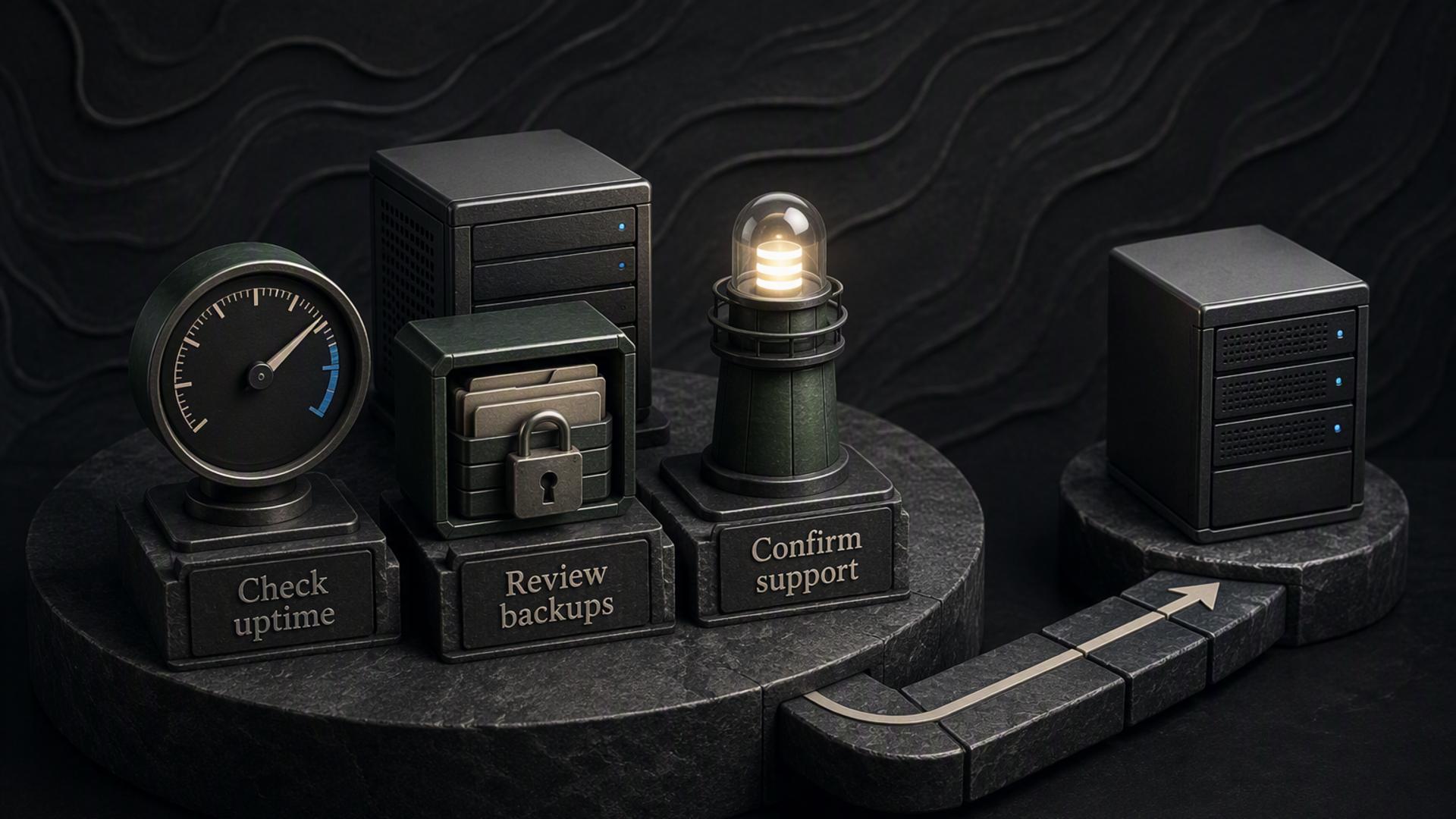
What to Consider Before Moving Your Website to a New Provider
Moving to a new hosting provider can improve your site's performance, reliability, and scalability, but it also requires careful planning. Choosing a new service based on price or promotional offers alone can lead to compatibility issues, unexpected downtime, or unnecessary disruptions. Before making the switch, it's important to evaluate whether the move supports your site's technical requirements and long-term goals. This guide covers the key factors to consider before changing providers, helping you make informed decisions and prepare for a smoother transition.
Why Website Owners Consider Switching Hosting Providers
A web hosting provider that once met your needs may no longer be the best fit as your site grows. Changes in traffic, business goals, or technical requirements often prompt owners to explore other options. In some cases, persistent performance issues or limited support make it difficult to maintain a reliable online presence.
Common reasons for changing providers include:
- Slow performance: Long page load times can affect user experience, conversions, and search visibility.
- Frequent downtime: Regular service interruptions reduce availability and can damage visitor trust.
- Limited resources: Entry-level plans may struggle to handle growing traffic or more demanding applications.
- Security concerns: Missing features such as automated backups, malware protection, or DDoS mitigation can increase risk.
- Poor customer support: Slow or ineffective technical assistance can delay issue resolution when problems occur.
- Scalability needs: Expanding businesses often require a hosting environment that can accommodate future growth without frequent migrations.
- Pricing and value: Rising renewal costs or limited features may lead owners to compare providers that offer better long-term value.
Recognizing why you want to switch is an important first step. It helps determine whether changing providers is the right solution or whether improving your current hosting environment may be enough to address the issue.
Is Website Migration the Right Solution?
A change in hosting isn't always the answer to performance or reliability issues. Before committing to a new provider, identify whether your current hosting environment is truly limiting your site or if the problem can be addressed another way, such as upgrading your existing plan or resolving site-specific issues.
If you've confirmed that your current provider no longer meets your technical requirements, struggles to support growth, or consistently falls short in reliability or support, moving to a new provider becomes a practical next step. Starting with a clear understanding of the problem makes it easier to choose a service that delivers meaningful long-term improvements instead of a temporary fix.
How to Evaluate a New Hosting Provider
Understand Your Website's Technical Requirements
Before comparing hosting plans, identify the technologies your site depends on. Check compatibility with your content management system (CMS), programming language version, database, and any server-side applications or tools. If the new environment doesn't support your existing setup, you may encounter errors or need to make unnecessary changes after the move.
Assess Performance, Resources, and Scalability
Look beyond storage space when evaluating hosting plans. Consider the available CPU, memory, storage type, bandwidth, and caching features to determine whether they match your site's workload. If you expect traffic or resource demands to increase, choose a plan that allows you to scale without requiring another provider change in the near future.
Review Security and Backup Features
A reliable hosting service should include essential security measures such as SSL support, automated backups, malware scanning, firewall protection, and DDoS mitigation. Review how backups are created, how long they're retained, and how easily they can be restored. These features can significantly reduce downtime and data loss if something goes wrong.
Check Migration Assistance
Migration services vary between providers. Some only transfer website files, while others also migrate databases, email accounts, SSL certificates, and configuration settings. Before committing, confirm what the service covers, whether additional fees apply, and how much assistance is available if issues arise during the transition.
Understand the Total Cost of Switching
An introductory discount doesn't always reflect the long-term cost of hosting. Compare renewal rates, backup fees, SSL pricing, migration charges, and optional add-ons before making a decision. Evaluating the total cost upfront helps you avoid unexpected expenses after your initial term ends.
Important Details to Consider Before Switching Providers
Review Email Hosting
If your current hosting plan includes email services, find out how those accounts will be handled after the switch. Not every provider offers email hosting, and those that do may have different features, storage limits, or migration options. Clarifying this in advance helps prevent service interruptions and avoids unexpected configuration work.
Understand Domain and DNS Management
Moving your site doesn't necessarily mean transferring your domain registration. Before switching providers, confirm where your domain is registered, who manages your DNS records, and whether any updates will be required. Keeping these responsibilities clear can simplify the transition and reduce the risk of connectivity issues.
Consider Potential Downtime
Even with professional migration assistance, brief interruptions may occur during the transition. Ask your prospective provider about their migration process, expected downtime, and the measures they take to keep your site accessible. Understanding these expectations allows you to schedule the move at a time that minimizes the impact on visitors and business operations.
Think About SEO Implications
Changing hosting alone shouldn't affect search rankings if your site's URLs and content remain unchanged. However, server configuration, page speed, uptime, and crawl accessibility can influence how search engines interact with your site after the move. Choosing a provider with a reliable infrastructure helps maintain consistent performance and reduces the likelihood of SEO-related issues.
Questions to Ask Before Choosing a New Hosting Provider
Before making your final decision, ask these questions to determine whether a hosting provider is the right fit for your needs:
- Does this provider support my website's current technical requirements and allow room for future growth?
- Will the available resources and performance meet my expected traffic, applications, and workload?
- Are security features, backups, and migration assistance included, or will they cost extra?
- How will email services, domain management, and DNS records be handled after the move?
- What are the renewal costs, and do the included features provide good long-term value?
- Can I rely on the provider's support team if issues arise before, during, or after the transition?
If you can answer these questions with confidence, you'll be better equipped to choose a provider that supports your site's technical needs, business goals, and long-term growth.
Conclusion
No two websites have the same requirements, which means there isn't a single hosting provider that's right for everyone. The best choice is one that supports your site's current needs while giving you the flexibility to grow without unnecessary compromises.
Rather than making a decision based on promotional offers or feature lists alone, focus on finding a provider that aligns with your goals, technical requirements, and expectations for reliability. Taking that approach will help you choose a hosting environment that's built for long-term success, not just your next move.